Bridgewater Club's Renovated Clubhouse: What Buyers Should Know About HOA and Club Dues
September 24, 2026
September 24, 2026
In an IndyStar report, Bridgewater Club chief operating officer Mike Gardner described the renovation as "an incredible example of our commitment to delivering exceptional experiences for our members."
He was talking to members. That distinction matters more than it sounds like it should, because it points to something a lot of home shoppers get wrong about Bridgewater Club before they ever tour a house there. The neighborhood and the country club share a name, a gate, and a mailing address. They do not share a bill.
The scope of what reopened in May was not small. Bridgewater's 90,000-square-foot clubhouse and its 240-acre Pete Dye course went through what amounted to a full rebuild: reconstructed greens and bunkers, new forward tees, turf chosen for Indiana's weather swings, repaved cart paths, and an expanded practice green. Inside, the Zinc Bar got a redo along with the rest of the member-facing spaces. The club did not disclose what any of it cost when asked.
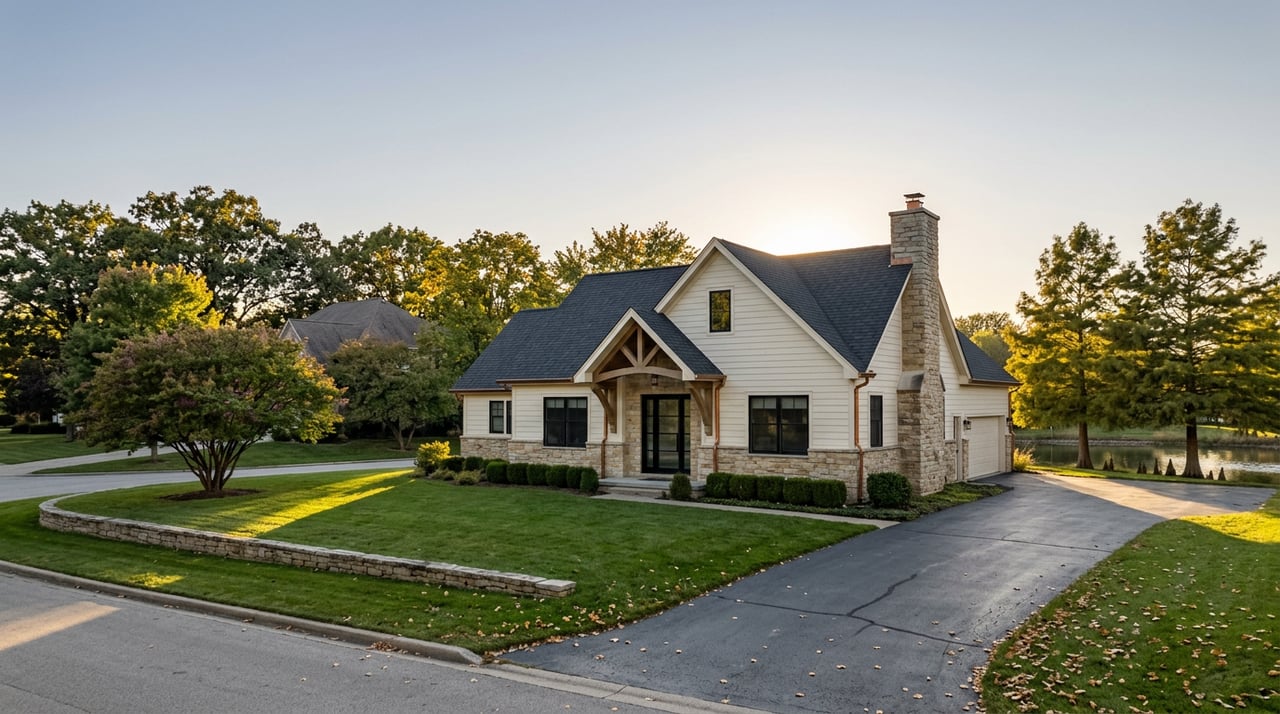
If you drive through Bridgewater this fall, you will see the result whether or not you ever set foot inside. That is the point worth sitting with. The clubhouse sits at the center of a neighborhood of custom estates, villas, and townhomes, and its condition shapes how the whole community photographs, how it shows on a listing, and how it feels to a buyer touring the streets around it. But the people who paid for that renovation and the people who benefit from its curb appeal are not automatically the same group.
Here is the mechanic that gets glossed over in most neighborhood overviews. The Bridgewater Club, the private country club with the golf courses and the clubhouse, and the Bridgewater Club Master Association, the homeowners association that governs the neighborhood's common areas, are separate organizations. One does not fund the other. A newsletter from the master association makes this explicit: dues owed to the master association are distinct from club dues, and in some sections a third layer of neighborhood-association dues applies on top of both.
That separation means a home's HOA dues line on a listing sheet is not a stand-in for club membership. It is closer to a landscaping and common-area fee. The master association's own materials list current annual dues in the roughly $450 to $850 range, a figure that covers governance of shared property and grounds rather than anything happening inside the clubhouse walls.
Club participation runs on its own separate track, with its own separate application. The entry-level tier, Social Membership, carries a required $280 monthly fee plus a $35 monthly food and beverage minimum, according to figures published by a local buyer's group active in the neighborhood. Above that sit Platinum, Junior Platinum, Young Professional Platinum, and Corporate categories, each with its own access level and its own cost that the club does not publish. Golf access, the thing most people assume comes bundled with a Bridgewater Club address, lives inside those higher tiers.
| Master Association (HOA) | The Bridgewater Club | |
|---|---|---|
| What it governs | Common-area property, grounds, neighborhood covenants | Clubhouse, golf courses, member amenities |
| Typical annual cost | Roughly $450 to $850 | Social tier starts near $3,360 a year in dues, plus a $35 monthly food and beverage minimum; higher tiers cost more and are not published |
| Who pays it | Every homeowner in the master association | Only residents who choose to join, or whose home includes a bundled membership |
| What it buys | Neighborhood upkeep and shared infrastructure | Golf, dining, fitness, pools, tennis, pickleball access |
A few Bridgewater listings sidestep this question entirely by bundling a Social Membership into the sale, a detail that shows up occasionally in condo and villa listings in the neighborhood. When that happens, it is worth asking exactly which tier is included and whether it carries forward if the membership structure changes, since club materials note that dues and fees are subject to change over time.
This is where the May reopening actually matters for a buyer's math, more than the aesthetics of a rebuilt bunker or a repainted bar. Because the club funds its own capital projects independent of the master association, a renovation of this size does not show up as a special assessment on a non-member's HOA statement. Club leadership has described a philosophy of continual reinvestment in facilities, funded through the club's own membership revenue rather than passed through to every homeowner in the neighborhood.
For buyers who do not plan to join the club, the club's renovation costs are separate from the master association's dues. Club members pay dues for access to club facilities, which form part of the neighborhood setting.
Neither position is a problem. It is simply worth knowing which one you are in before you sign anything, because the two experiences of living in Bridgewater Club, member and non-member, cost noticeably different amounts and access noticeably different parts of the same 750 acres.
One more detail catches buyers off guard, and it sits on top of the dues question rather than replacing it. Bridgewater carries a Carmel mailing address, but school assignments in the neighborhood generally fall to Westfield-Washington Schools, and the community itself straddles the Carmel and Westfield line in Hamilton County. Because assignment can vary by parcel, it is worth confirming a specific home's district through county and school records before assuming the address on the mailbox tells you which school your kids will attend.
A few questions worth putting to a seller or a listing agent before you get attached to a specific Bridgewater address:
None of these questions will show up on a portal listing. They come up in conversation, usually after a buyer has already fallen for the curb appeal of a freshly renovated clubhouse they assumed came with the price of the house.
Is club membership required to buy a home in Bridgewater Club? No. The club and the master association are separate, and membership is a choice you make independently of buying property in the neighborhood.
Did the May renovation change master association dues? There is no indication that it did. The club has described funding its capital projects through its own membership revenue and reinvestment rather than through the master association, which governs a separate set of obligations.
What's the difference between the Social Membership and the higher club tiers? Social Membership is the entry point, with a required monthly fee plus a food and beverage minimum, and it does not include the golf access that draws many buyers to the neighborhood in the first place. The higher tiers, including Platinum and Young Professional Platinum, carry golf privileges, but the club does not publish their cost.
Bridgewater Club rewards buyers who ask precise questions rather than buyers who assume one number on a listing sheet covers everything the neighborhood offers. If you are comparing homes here and want a straight answer on what a specific property's dues actually include, or how the recent renovation might be shaping value in different sections of the community, William Spencer Jr. can walk through the details with you section by section. Let's Connect.
This article is general information, not legal, tax or financial advice. Consult a qualified professional about your situation.
Whether you're buying your first home, upgrading to your dream property, or preparing to sell, William provides personalized guidance, local market expertise, and a seamless experience from start to finish. With a commitment to integrity, clear communication, and exceptional service, he's here to help you achieve your real estate goals.